Real-world EV data
2025 Chevrolet BT1CCReal-world range and efficiency
Across 5 drives and 111 mi by 1 PlugLog driver, the 2025 Chevrolet BT1CC averaged 2.09 mi/kWh. That works out to about 358 mi of range.
From one driver so far: the numbers will firm up as more BT1CC drivers share.
Updated · from 5 shared drives
Showing all shared BT1CC drives
Efficiency by outside temperature
Cold batteries and cabin heat cost range. Here's how much, for these drives.
These drives didn't report the temperature.
Longer bars go further on each kWh.
Efficiency by speed
Air resistance climbs quickly with speed. Here's what it costs, by each drive's average speed.
- 20–40 mph2.28 mi/kWh≈ 391 mi range · 2 drives
- 40–55 mph1.94 mi/kWh≈ 333 mi range · 2 drives
- 55–70 mph2.09 mi/kWh≈ 358 mi range · 1 drive
Longer bars go further on each kWh.
Only drives from drivers who chose to share their efficiency data, with no names or locations. Efficiency is distance ÷ the energy each battery reported using, net of regen. Real-world range is the usable battery, measured from shared drives (or estimated from the EPA figures), × the real efficiency, at the drives' average speed (weighted by distance, like the efficiency). EPA ratings include charging losses, so vs EPA compares at the battery. How it's measured
Questions
- What is the real-world efficiency of the 2025 Chevrolet BT1CC?
- Across 5 real drives by 1 PlugLog driver (111 miles), the 2025 Chevrolet BT1CC averaged 2.09 mi/kWh. That's the energy its battery actually used, net of regen, not a lab test.
- What is the real-world range of the 2025 Chevrolet BT1CC?
- About 358 miles on a full charge: its usable battery (about 171 kWh) at the 2.09 mi/kWh it averaged, at an average 52 mph.
Other EVs
All EVs- 2024 Chevrolet Silverado EV 4WT2.11 mi/kWh · 316 drives
- 2024 Chevrolet Silverado EV 3WT2.24 mi/kWh · 310 drives
- 2026 Tesla Model Y Performance AWD3.64 mi/kWh · 218 drives
- 2026 Chevrolet Equinox EV AWD3.61 mi/kWh · 209 drives
- 2025 GMC Sierra EV2.25 mi/kWh · 277 drives
- 2025 Tesla Model Y Performance AWD3.54 mi/kWh · 304 drives
How it's measured
Real drives, straight from the battery.
EPA ratings come from a lab cycle. These come from the road: every drive shared by a PlugLog driver, recorded by the car itself.
Measured, not estimated
The PlugLog car app reads your battery's power many times a minute and checks it against the battery level. Efficiency is distance over the energy actually used, net of regen.
Shared on purpose
Drives count only if their driver shares their efficiency and charging data, and then all of them do, so no one picks their best. No names, no routes, no locations: just how the EV did.
Every condition
Cold mornings, highway runs, short hops. Filter by the weather, speed and trip length to see the numbers that match how you'd drive.
Track your own EV
Get numbers like these for your car.
PlugLog logs every drive and charge, works out what your EV really gets, and lets you share it to help the next buyer.
- Free
- Android Automotive car app
- Share only what you choose
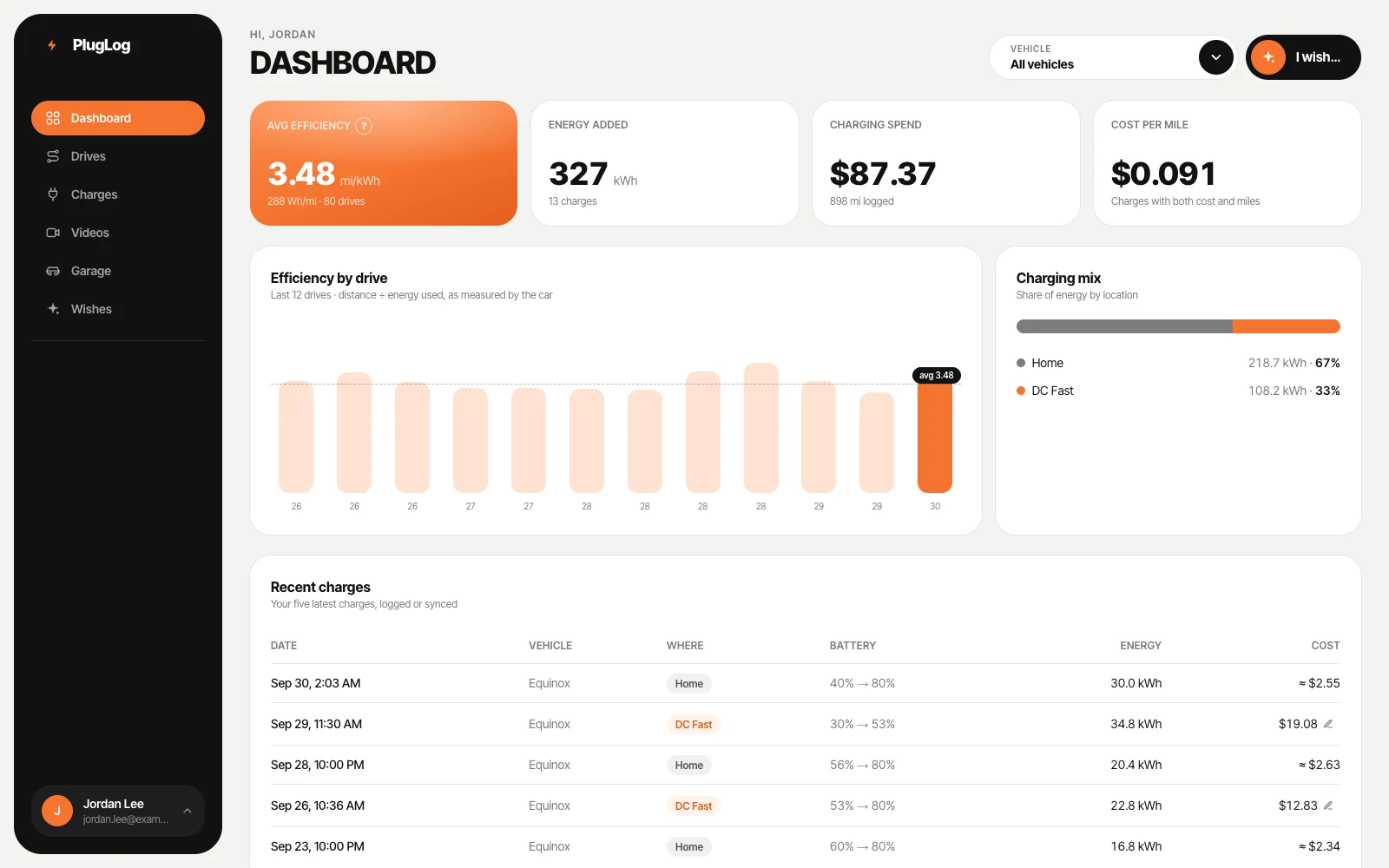
Your EV's dashboard
Your own efficiency, energy added, charging spend and cost per mile, drive by drive.
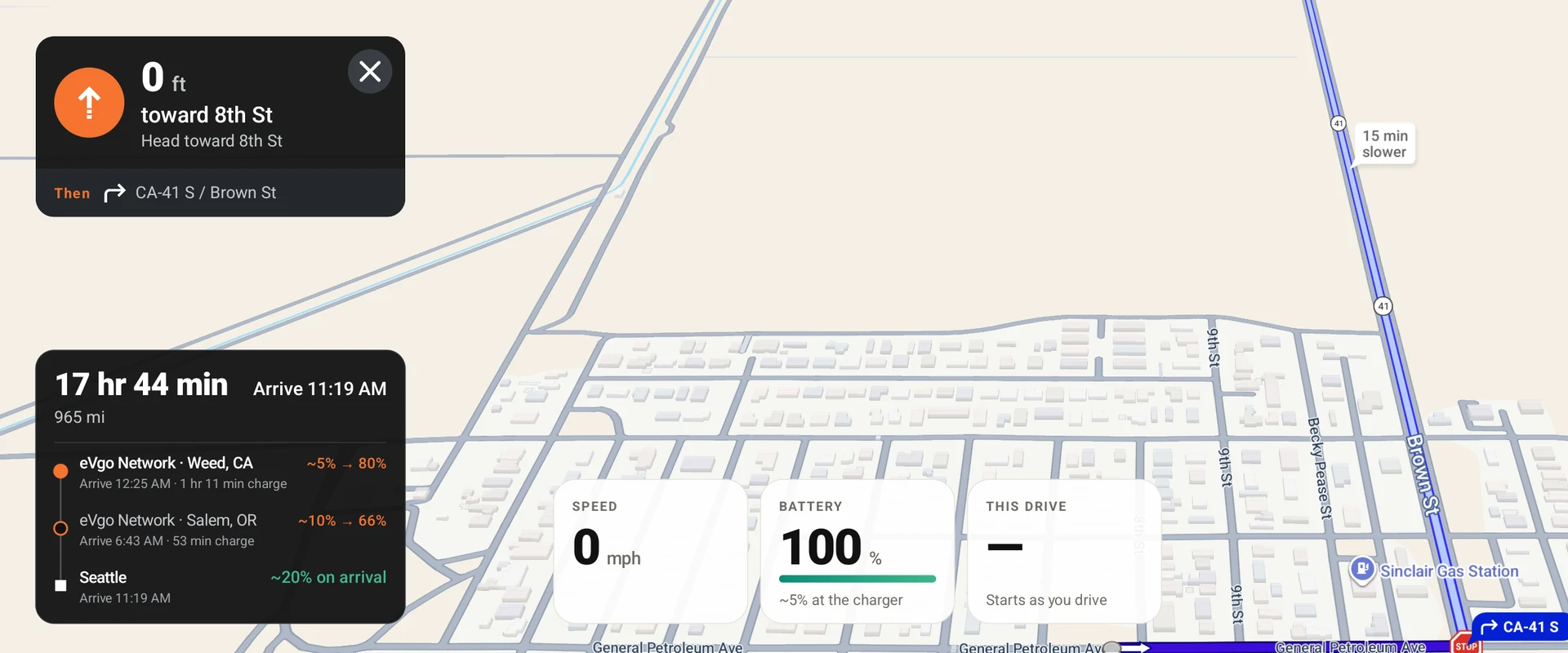
Live in your car
On Android Automotive, PlugLog navigates, plans your charging stops, and records every drive and charge on its own, with this drive's efficiency on the map.
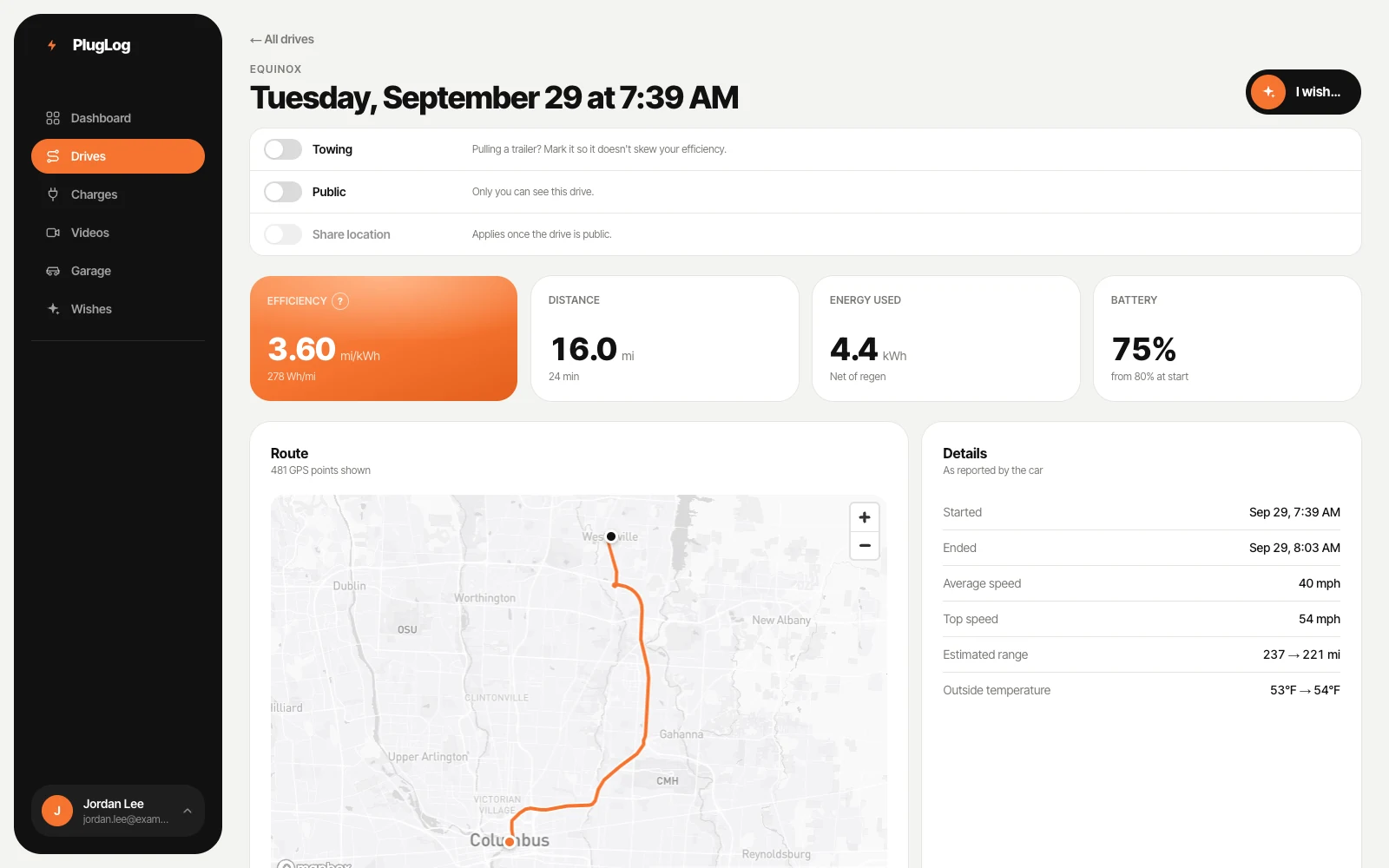
Every drive, second by second
Where the energy went, driving, regen and stopped, with the route, speed and battery level.
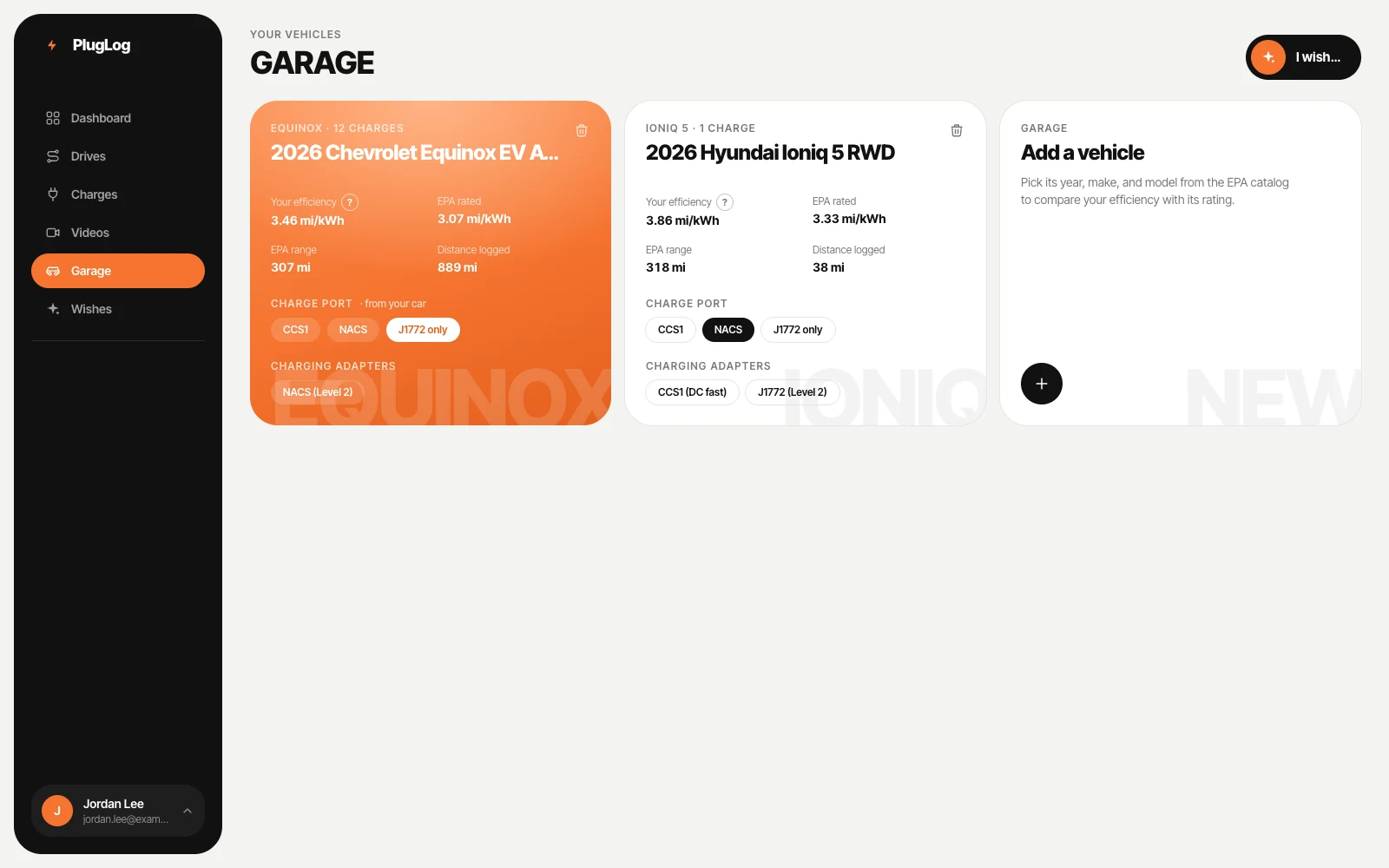
You vs the EPA rating
See how your EV compares with its rating, and share your drives to add to the numbers above.
Your EV belongs on this page.